


Tactical Urbanism
in
Auckland
Safe School Streets
Safe School Streets was a trial to provide safer routes to school for more than 5000 young children.
Safe School Streets was a trial to provide safer routes to school for more than 5000 young children.
The Safe School Streets programme involved tactical urbanism trials at 13 Auckland primary schools, providing safer routes to school for more than 5000 children aged five to 11. Each project aimed to increase safety outside the school, reduce the number of vehicles during peak times and encourage more students and their families to walk and cycle to and from school each day.
Safe School Streets began as a pilot programme, testing a tactical urbanism methodology relatively new for transport project delivery in New Zealand. This methodology followed one-day TMP-based trials and multi-month ‘interim’ trials of installed temporary street infrastructure. The lessons learnt from trials then informed possible long-term permanent changes. The diversity of street and social contexts generated significant learning about how to provide safety improvements that encourage walking and cycling at schools.
Crank managed the delivery of all 13 projects and the Safe Schools programme as a whole. We also supported a range of communication and engagement activities that were led by internal AT teams.
Crank managed the delivery of each Safe Schools project and the programme as a whole. This involved coordinating inputs from a multidisciplinary consultant team comprising designers, engineers, technical specialists, monitoring and evaluation consultants, and communication and engagement and community transport teams at AT.
As tactical urbanism, each Safe School Streets project was delivered at a pace much faster than traditional transport project delivery - from initiation to completion in 12 to 18 months. This pace required innovation in many processes that wrapped around transport project delivery. Crank provided input into approaches for materials and contractor procurement and internal reviews and approvals.
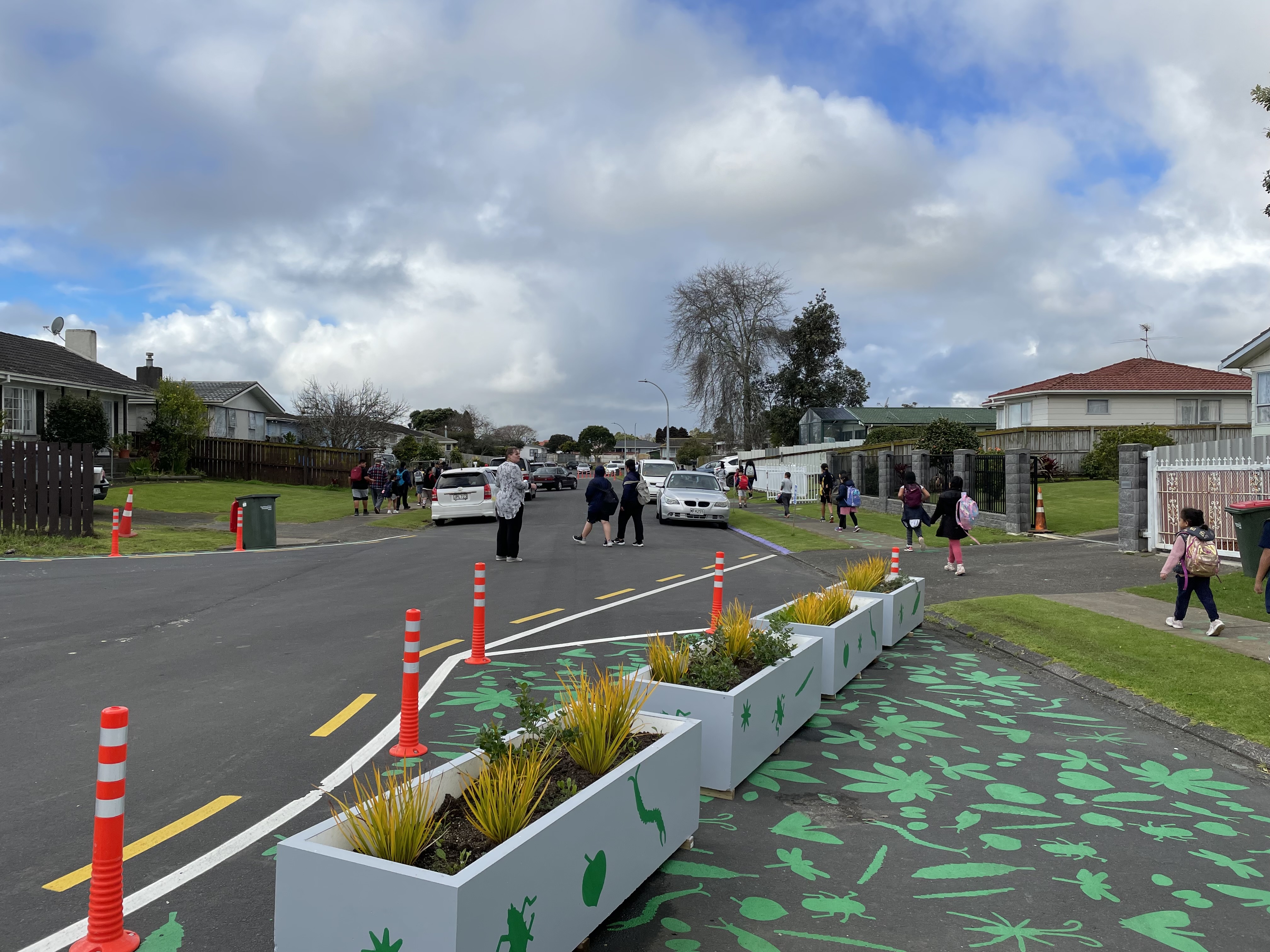
With 13 projects, Safe Schools had a diverse range of street and social contexts and many stakeholders: community members, school leadership, multiple local boards, council departments, and government development agencies.
Crank led or supported engagement with many stakeholders, from close working relationships with school leaders to on-street meetings with resident groups to aligning delivery with adjacent Kainga Ora developments.
Tactical urbanism also requires responsiveness to community feedback on trials. Crank worked with the consultant team to develop a methodology to refine trials within days or a few weeks of receiving ‘Have Your Say’ responses.
Delivering multiple concurrent projects at the pace of Safe Schools required Crank to create systems to support some key project activities at scale:
All 13 trials are in place on the streets around schools, and almost all have completed refinements based on feedback from school communities and project team observations. The evaluation of all trials will be spread over late-2021 and early-2022.
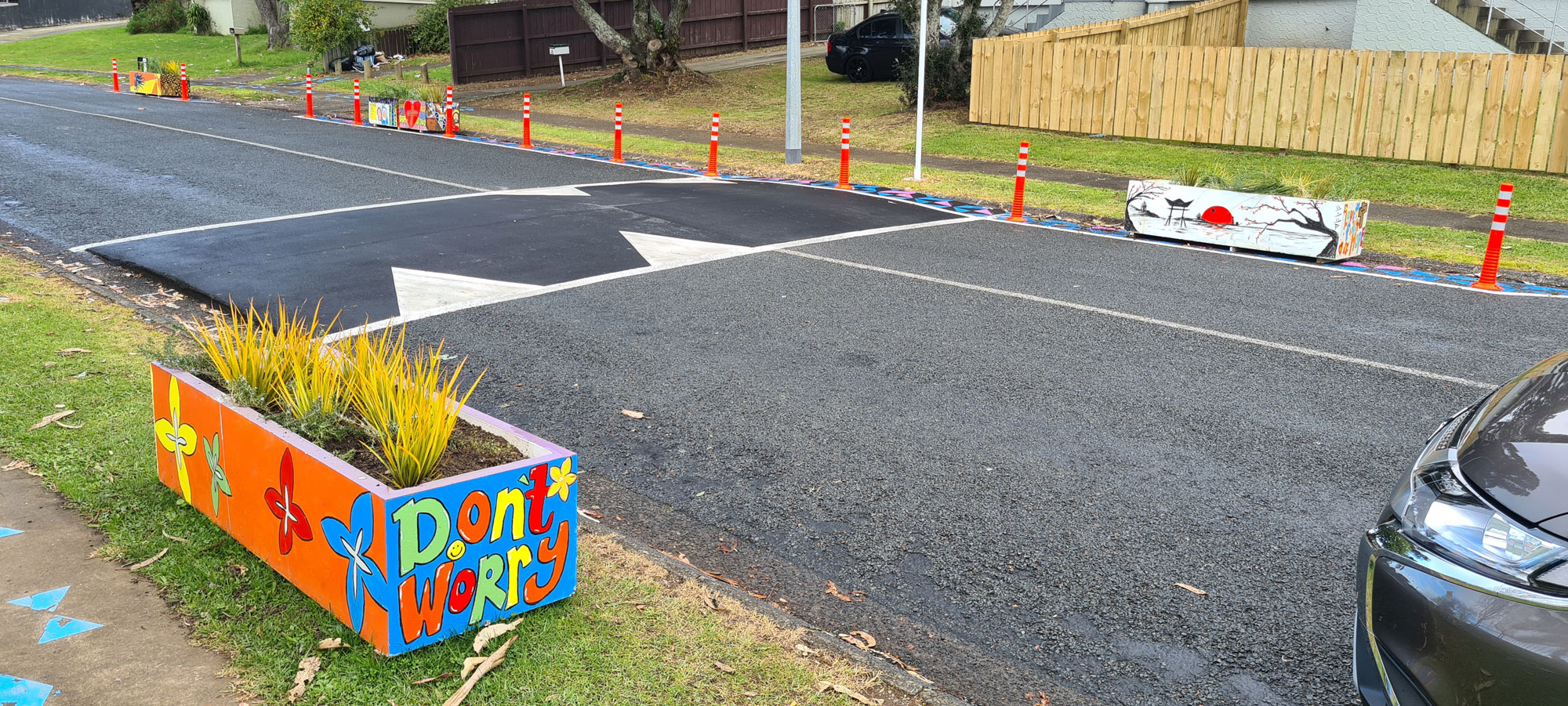
The first trial to be installed is now undergoing a transition to a permanent scheme (ref. image below). This follows the evaluation of the trial with the school community that found that twice as many parents felt it was safe for their children to walk or cycle to school following the installation of the trial elements.
The Safe School Streets programme involved tactical urbanism trials at 13 Auckland primary schools, providing safer routes to school for more than 5000 children aged five to 11. Each project aimed to increase safety outside the school, reduce the number of vehicles during peak times and encourage more students and their families to walk and cycle to and from school each day.
Safe School Streets began as a pilot programme, testing a tactical urbanism methodology relatively new for transport project delivery in New Zealand. This methodology followed one-day TMP-based trials and multi-month ‘interim’ trials of installed temporary street infrastructure. The lessons learnt from trials then informed possible long-term permanent changes. The diversity of street and social contexts generated significant learning about how to provide safety improvements that encourage walking and cycling at schools.
Crank managed the delivery of all 13 projects and the Safe Schools programme as a whole. We also supported a range of communication and engagement activities that were led by internal AT teams.
Crank managed the delivery of each Safe Schools project and the programme as a whole. This involved coordinating inputs from a multidisciplinary consultant team comprising designers, engineers, technical specialists, monitoring and evaluation consultants, and communication and engagement and community transport teams at AT.
As tactical urbanism, each Safe School Streets project was delivered at a pace much faster than traditional transport project delivery - from initiation to completion in 12 to 18 months. This pace required innovation in many processes that wrapped around transport project delivery. Crank provided input into approaches for materials and contractor procurement and internal reviews and approvals.
With 13 projects, Safe Schools had a diverse range of street and social contexts and many stakeholders: community members, school leadership, multiple local boards, council departments, and government development agencies.
Crank led or supported engagement with many stakeholders, from close working relationships with school leaders to on-street meetings with resident groups to aligning delivery with adjacent Kainga Ora developments.
Tactical urbanism also requires responsiveness to community feedback on trials. Crank worked with the consultant team to develop a methodology to refine trials within days or a few weeks of receiving ‘Have Your Say’ responses.
Delivering multiple concurrent projects at the pace of Safe Schools required Crank to create systems to support some key project activities at scale:
All 13 trials are in place on the streets around schools, and almost all have completed refinements based on feedback from school communities and project team observations. The evaluation of all trials will be spread over late-2021 and early-2022.
The first trial to be installed is now undergoing a transition to a permanent scheme (ref. image below). This follows the evaluation of the trial with the school community that found that twice as many parents felt it was safe for their children to walk or cycle to school following the installation of the trial elements.

